Funny Mummy: The Quirky Font That Brings Playful Energy to Your Brand
A Typeface That Doesn't Take Itself Too Seriously
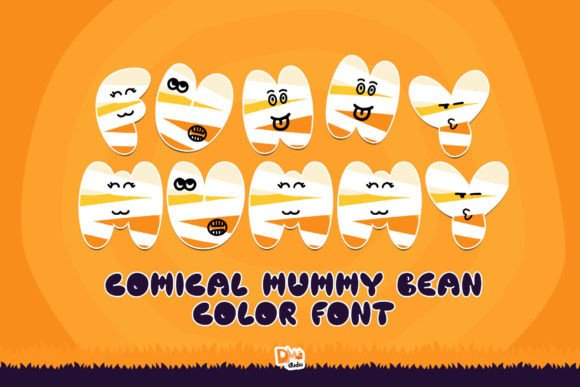
There are moments in design where you need a font that just makes people smile. You know the feeling—when a child’s birthday invitation needs to pop off the page, or when a startup wants to signal that they’re approachable and fun without being childish. That’s exactly where Funny Mummy steps in. This display font carries a bold, cartoony personality with slightly uneven letterforms that give it a hand-drawn, whimsical quality. It’s not trying to be elegant or refined. It’s trying to be joyful, energetic, and impossible to ignore.
What makes this typeface stand out in a sea of creative fonts is its refusal to conform to perfect geometry. Each letter has its own little quirks—subtle variations in weight, gentle tilts, and rounded edges that feel like they were sketched by someone having a genuinely good time. That imperfection is its strength. In a world saturated with sterile, algorithm-perfect modern typography, Funny Mummy feels human. It feels alive.
Where This Font Truly Shines
Let’s talk about real applications, because a font is only as valuable as the projects it elevates. Funny Mummy is a premium font that earns its place in specific contexts where personality outweighs formality.
Children’s publishing and educational materials are obvious territory. Book covers, chapter headings, activity sheets, and flashcards all benefit from a typeface that kids find visually inviting. But here’s the thing—it works for adults too. Think about packaging design for snack brands, craft beverages, or novelty products. A granola bar with a sense of humor? A craft soda that winks at you from the shelf? That’s Funny Mummy territory.
Branding campaigns targeting families, young adults, or anyone who appreciates a lighthearted touch find real value here. A logo design for a daycare center, a family-friendly restaurant, or a toy company practically begs for this kind of energy. It communicates warmth and approachability before a single word of copy is read.
For digital applications, consider social media graphics where attention spans are microscopic. A bold, quirky heading in Funny Mummy can stop a scroll faster than another generic sans serif font ever could. YouTube thumbnails, Instagram story templates, and podcast cover art all benefit from that instant personality injection. In web design, it works beautifully as an accent font for headlines, calls to action, or landing page banners—places where you want visitors to feel something immediately.
Game designers, event planners, and content creators working on merchandise will find it equally useful. T-shirt designs, sticker sheets, greeting cards, and party decorations all thrive with a font that doesn’t pretend to be serious.
The Psychology Behind the Playfulness
Fonts shape perception in ways most people never consciously register. When someone encounters Funny Mummy, their brain processes more than letter shapes. They absorb tone, energy, and intent. This creative font signals that a brand or project doesn’t take itself too seriously—that there’s room for laughter and lightness.
That perception directly influences brand identity. A small business owner choosing this typeface for their logo is making a strategic decision about how customers will feel walking through their door or landing on their website. It builds recognition because playful fonts are inherently more memorable than safe, neutral choices. People remember what made them smile.
There’s also a practical dimension to visual hierarchy. Funny Mummy commands attention at larger sizes, making it ideal for headlines and hero text. Pair it thoughtfully with a clean serif font or a simple sans serif font for body copy, and you create a hierarchy that guides the eye naturally. The contrast between playful display text and readable supporting type creates rhythm and keeps layouts from feeling monotonous.
Working With Funny Mummy in Your Projects
Before committing to any design assets, it’s worth testing whether the font genuinely fits your project’s goals. Pull up your existing brand colors, imagery, and messaging. Set a few headlines in Funny Mummy and look at them with fresh eyes. Does the personality match your audience? A children’s museum? Absolutely. A law firm? Probably not. Context is everything.
Font pairing deserves careful attention. Because Funny Mummy is bold and expressive, it can overwhelm a layout if used for too much text. Reserve it for headings, titles, and short bursts of emphasis. Pair it with a stable, readable body font—a geometric sans serif font like Montserrat or a friendly serif font like Lora creates balance without competing for attention. Avoid pairing it with other decorative or handwritten font styles, which creates visual noise rather than contrast.
Check what styles and weights are included with your purchase. Some versions of playful fonts include only uppercase letters, limited punctuation, or no numerals. Knowing this upfront prevents frustration during production. If you’re working on multilingual projects, verify that the character set supports the languages you need.
Readability is the line you need to respect. At small sizes, the uneven character of Funny Mummy can make extended reading difficult. Use it at 24pt and above for screen work, and even larger for print where ink absorption can soften those quirky details. Test across devices and print proofs before finalizing anything.
Finally, understand the licensing. As a commercial font, Funny Mummy typically requires a license that covers your specific use case—desktop, web, app, or merchandise. Read the terms. A font used on a client project may require a different license than one used for your own brand. This isn’t bureaucracy; it’s protecting the creative work that went into building the typeface and protecting your own projects from legal complications down the road.
Making It Work for You
The best editorial design choices happen when aesthetics and strategy align. Funny Mummy isn’t a font you choose because it’s trendy. You choose it because your project genuinely benefits from warmth, humor, and visual energy. It solves a specific communication problem—how do you make something feel approachable, memorable, and fun without sacrificing clarity?
For entrepreneurs and marketers, it’s a tool that differentiates. In crowded markets where every competitor uses the same safe typographic choices, a bold and cartoony display font becomes a competitive advantage. It signals confidence—that you know your audience well enough to meet them with a grin rather than a handshake.
For crafters and hobbyists, it opens creative doors. Personal projects like scrapbooks, custom invitations, and home décor prints gain character that generic fonts simply can’t deliver.
Whatever your project, give Funny Mummy the space to do what it does best: make people lean in, smile, and remember what they saw. That’s the real power of a well-chosen typeface—it doesn’t just display words. It sets a mood, tells a story, and turns casual viewers into engaged audiences.