Guinea: A Color Font with West African Vibrancy
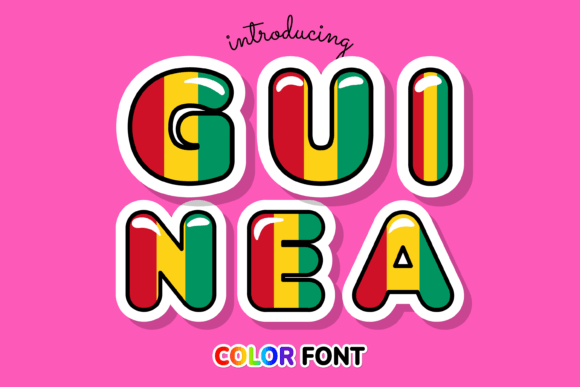
When a project needs more than just letters on a page—when it demands a story, a mood, and a burst of authentic culture—the typeface you choose becomes a central character. Guinea is a color font designed to fill that role with striking confidence. Inspired by the vibrant energy of the Guinea flag, this typeface isn't just a set of characters; it's a visual experience. Its bold, geometric forms are immediately recognizable, channeling the flag's iconic red, yellow, and green into every letter, number, and symbol. This isn't a subtle serif font or a neutral sans serif; it's a statement piece built for moments that need to stand out.
The personality of Guinea is unmistakable. It carries a sense of pride, celebration, and modern African aesthetics. The clean lines and solid shapes give it a contemporary feel, while the integrated color palette roots it in a specific, joyful cultural context. Think of it as a display font with a built-in design system. The color isn't applied as a gradient or a separate layer; it's woven into the letterforms themselves, creating a cohesive and impactful look straight out of the box. This makes it a fantastic creative font for projects where visual hierarchy is established through boldness and color contrast rather than subtle typographic shifts.
Where This Creative Font Truly Shines
Understanding where Guinea works best is key to using it effectively. Its inherent vibrancy makes it a natural fit for projects centered on celebration, culture, and community. Imagine it powering the logo design for a music festival celebrating African diaspora artists, or setting the headlines for an editorial spread in a magazine focused on contemporary African fashion. The font's character is strong enough to anchor a brand identity for a restaurant serving West African cuisine or a boutique specializing in handmade textiles. It brings an immediate sense of place and energy.
Beyond cultural projects, its boldness translates well to packaging design for products that want to convey energy, natural ingredients, or artisanal quality. For a hot sauce brand or a line of exotic spices, Guinea on the label instantly communicates flavor and origin. In the digital realm, it's a powerhouse for social media graphics. A single word set in this typeface can stop the scroll, making it ideal for event announcements, motivational quotes, or promotional posts that need high impact. It's also a compelling choice for web design hero sections or banner ads where capturing attention in a fraction of a second is non-negotiable.
Practical Guidance for Designers and Creators
Adopting a premium font like Guinea requires a bit of practical strategy. First, always test it in the context of your specific project. Its bold color works best at larger sizes—think headlines, logos, and feature text. For body copy or small captions, its readability can diminish, and pairing it with a clean sans serif font or a straightforward serif font is usually the wisest approach. A simple, neutral typeface for supporting text will let Guinea command attention without creating visual chaos.
Evaluate your project's fit by asking: Does my message align with the font's personality of vibrancy and celebration? Is my target audience likely to appreciate this bold aesthetic? If you're working on a corporate financial report, this might not be the right tool. But for a community event poster, a lifestyle blog, or a creative agency's portfolio, it could be perfect. When reviewing the font files, you'll find it's delivered as an OpenType-SVG color font. This means it's compatible with professional design software like Adobe Photoshop and Illustrator, as well as tools like Silhouette and Inkscape.
Important Compatibility Note: The OTF/TTF files for this specific color font are not compatible with Cricut machines. This is a crucial consideration for crafters and DIY enthusiasts. If your workflow involves a Cricut, you'll need to explore alternative design methods or different font types. For those using compatible software, the font installs like any other, but renders with its full-color glory. Always check the licensing to ensure it covers your intended use, especially for commercial projects like merchandise or client work.
Beyond the Obvious: Unexpected Applications
While its primary strength is in bold headlines, creative professionals can find nuanced ways to leverage Guinea. Consider using a single letter from the typeface as a decorative monogram or a watermark on photography. In editorial design, a pull quote set in Guinea can serve as a dynamic visual break in a long-form article. For digital presentations, using it for slide titles can inject energy into a otherwise static deck. The key is to treat it as a design asset rather than just a font—a tool for adding a specific, powerful accent.
When thinking about font pairing, contrast is your friend. Pair Guinea with a geometric sans serif for a modern, clean look, or with a delicate script font for an interesting juxtaposition of strength and elegance. Avoid pairing it with other highly decorative or handwritten fonts, as they will compete for attention and create visual noise. The goal is to let its unique color and form be the star.
Ultimately, Guinea is more than a typeface; it's a celebration rendered in typography. It offers designers, marketers, and creators a direct way to infuse their work with energy, culture, and a unmistakable visual punch. By understanding its strengths, respecting its limitations, and pairing it thoughtfully, you can unlock its potential to make any project not just seen, but felt. For those ready to explore this vibrant tool, our Ultimate Font Guide provides detailed instructions on installation and usage to get you started.