St Patrick's: An Organic and Beautiful Color Font
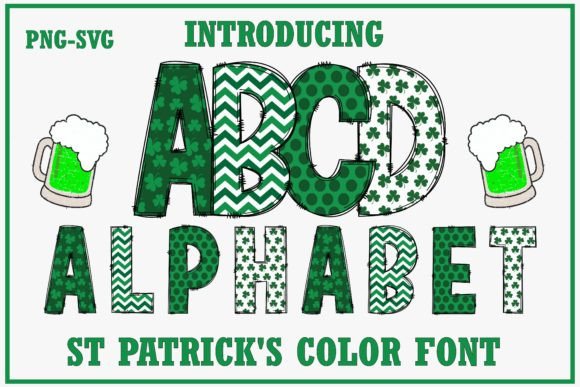
Finding a font that truly captures a specific mood can feel like searching for a needle in a haystack. You need something that feels authentic, carries personality, and doesn't look like it was pulled from a generic default library. When I came across St Patrick's, it immediately stood out as a premium font option that bridges the gap between high-end editorial design and organic, earthy aesthetics. It is a color font, meaning it utilizes built-in color data to display gradients and shading directly in the text, but its core structure is what makes it versatile.
Visually, St Patrick's leans heavily into an organic, slightly textured aesthetic without sacrificing the clean lines required for modern brand identity. It isn't a chaotic script font or a rigid sans serif font. Instead, it occupies a unique space, often utilizing serifs or brush-like terminals that feel handcrafted. The appeal lies in its ability to look expensive and curated. It avoids the trap of looking too "digital" or sterile, making it an incredible asset for designers who want to inject warmth into their layouts. If you are building a library of design assets, this typeface fills the specific niche of "elegant organic" that is notoriously difficult to find.
Where This Creative Font Truly Shines
The versatility of St Patrick's is one of its strongest selling points. Because it balances personality with legibility, it works across a surprisingly wide range of applications. However, understanding where it fits best is key to maximizing its potential. Here are the primary areas where this creative font elevates the work:
- Logo Design and Brand Identity: For brands in the wellness, artisan food, boutique fashion, or eco-friendly spaces, St Patrick's offers an immediate visual shorthand for quality and nature. It helps establish a brand identity that feels grounded yet sophisticated.
- Packaging Design: Physical products need shelf presence. The organic flow of this typeface works beautifully on labels for wine, cosmetics, or specialty goods. It suggests that the product inside is crafted with care.
- Publishing and Editorial Design: While long-form body text usually requires a standard serif font or sans serif font, St Patrick's is a powerhouse for headlines, pull quotes, and chapter titles in magazines or lifestyle books.
- Digital and Social Media: In a feed dominated by bold, blocky modern typography, this font offers a softer, more inviting alternative. It works exceptionally well for quote graphics, promotional headers, and web design hero sections where you want to make a distinct impression.
It is also worth noting its utility for small business owners and crafters. If you are creating wedding invitations, greeting cards, or personalized stationery, the inherent beauty of St Patrick's reduces the need for heavy graphical embellishments. The text itself becomes the decoration.
Influence on Perception and Engagement
Typography does more than display words; it shapes how the audience feels about the message. Choosing a display font like St Patrick's has a direct impact on brand perception. When a viewer sees this font, they subconsciously associate the brand with values like authenticity, attention to detail, and elegance. This is crucial for marketers and entrepreneurs trying to build trust.
There is also the matter of visual hierarchy. Because St Patrick's has a distinct personality, it naturally draws the eye. You can use this to your advantage to guide the reader's attention to the most critical information—whether that is a call to action on a landing page or the headline of a blog post. However, this distinctiveness means you must be careful with readability. While it is legible at medium to large sizes, using it for small, dense paragraphs of technical information would likely frustrate the reader. It is a display font at heart, designed for impact rather than rapid scanning of body copy.
Consistency is another factor. By using St Patrick's across your headers, sub-headers, and marketing collateral, you create a cohesive visual language. This consistency builds recognition. Over time, your audience will start to associate the specific curves and style of the font with your brand before they even read the words.
Practical Guidance for Implementation
Adopting a new font into your workflow requires a bit of strategy. You cannot simply drop St Patrick's into a project and hope for the best. Here is how to approach integrating this asset effectively.
Evaluating Project Fit and Pairing
Before committing, ask if the font’s personality matches the project's tone. If you are designing for a cybersecurity firm, St Patrick's might be too organic. If you are designing for a florist, it is perfect. Once you decide it fits, you need a font pairing. Because St Patrick's has high character, it needs a neutral partner. A clean sans serif font like Helvetica, Inter, or Lato usually works best for the body text. This contrast allows the headlines to pop without creating visual clutter.
Testing and Readability
Always test the font in context. Mock up a business card, a website header, and an Instagram post. Check the readability at different sizes. Look at the kerning (spacing between letters)—sometimes with script fonts or organic styles, you may need to manually adjust spacing in your design software to ensure letters don't clash. Also, review the included styles. Does it come with bold or italic variations? Does the color font version render correctly in your specific software? (Note that color fonts often have limitations in older software versions, so always check compatibility).
Licensing and Commercial Use
Since St Patrick's is a commercial font, you must review the licensing terms. If you are an agency using this for a client, ensure the license covers the end product. If you are a publisher using it for a book cover, verify that the print run limits align with the license. Treating your fonts as professional design assets means respecting the intellectual property of the creators, which protects you legally and supports the designers who make these tools.
Ultimately, St Patrick's is more than just a typeface; it is a stylistic statement. It offers a way to humanize digital content and add a tactile quality to print materials. For content creators and hobbyists looking to professionalize their aesthetic, or seasoned designers looking for a fresh organic voice, it provides a robust solution that balances beauty with utility.